
The Industrial Shift: Why Bulk Prepreg is Replacing Dry Layup
In the high-stakes world of composite manufacturing, the transition from traditional wet layup or vacuum infusion to carbon fiber prepreg represents a significant leap in both quality and process control. For the workshop owner or the industrial procurement officer, buying carbon fiber prepreg in bulk is not merely a logistical decision—it is a commitment to a higher standard of engineering. For a broader view of material science, see our Ultimate Guide to Carbon Fiber Fabrics. However, scaling up with prepreg introduces a unique set of challenges that many distributors and first-time bulk buyers fail to anticipate, particularly regarding the cold chain.
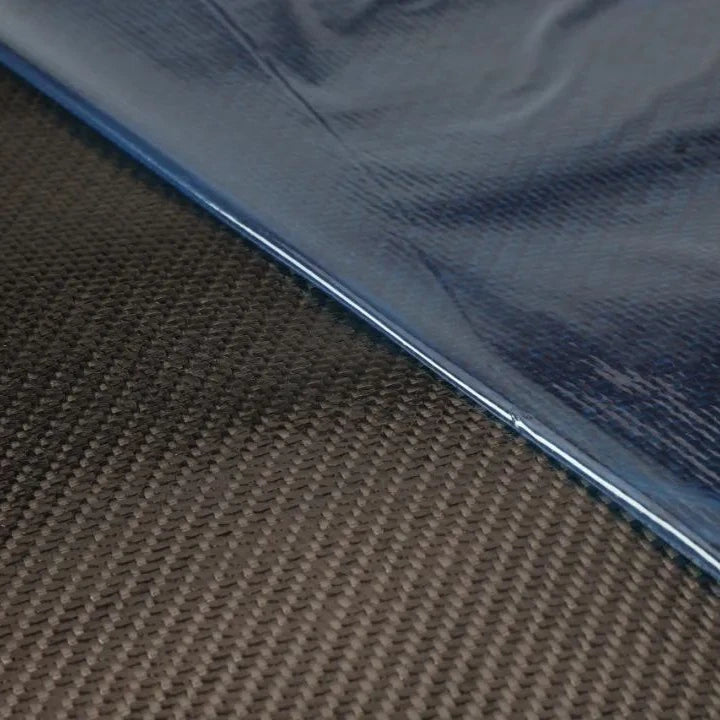
When you are working with dry fabrics, your biggest concerns are weave distortion and contamination. But with prepreg, you are dealing with a live chemical system. The resin is already impregnated into the fibers, usually at a precise ratio of 38-42% by weight. This “B-staged” resin is partially cured and remains stable only at extremely low temperatures. If you treat a 100-meter roll of prepreg with the same casual storage habits as a roll of dry glass fiber, you are effectively throwing thousands of dollars into the scrap bin.
The Science of the Ticking Clock: B-Stage Resin and Shelf Life
To understand why cold chain management is the most critical part of prepreg wholesale, we have to look at the chemistry. Prepreg resin systems are designed to be “staged.” At -18°C (0°F), the chemical reaction is almost entirely halted. This is the material’s “Shelf Life,” which typically spans 6 to 12 months. However, the moment the temperature rises, the cross-linking of the epoxy molecules begins to accelerate. For more on matching resin systems to your process, see our guide to epoxy resin selection.
Most industrial-grade prepregs, such as our T700 3K Twill, have an “Out-Life” of approximately 21 to 30 days at room temperature (21°C). This is a cumulative timer. If the material spends 2 days on a shipping dock, 1 day in transit in an unrefrigerated truck, and 4 hours on your cutting table, you have used up 3.5 days of that Out-Life. Once the Out-Life is exceeded, the resin loses its “tack” (stickiness) and “drape” (ability to conform to a mold). Worse, the resin’s viscosity during the cure cycle will be too high, leading to “dry” spots and interlaminar porosity.
What Distributors Get Wrong: Shipping and Transit Hazards
When you are sourcing wholesale, the lowest price per square meter often comes at the cost of logistics. A common mistake made by generalist distributors is shipping prepreg without adequate thermal protection. For domestic shipments, prepreg should be packed in heavy-duty insulated coolers with sufficient dry ice to maintain sub-zero temperatures for at least 48 hours beyond the expected delivery date. For international sea freight, “Reefer” (refrigerated) containers set to -18°C are mandatory.
Always ask your supplier for a “Time-Temperature Indicator” (TTI) or a data logger to be included in the shipment. This small device records the temperature throughout the transit. If the logger shows a spike to 25°C for twelve hours, you have a legitimate claim for a replacement. Without this data, you are flying blind, and the failure of your $20,000 mold cycle might be blamed on your layup technique when the fault actually lies in the distributor’s shipping dock.
Workshop Infrastructure: Preparing for Bulk Arrivals
Before that 50kg shipment arrives, your shop needs to be ready. A standard kitchen freezer won’t cut it. You need an industrial chest freezer with a digital controller and a backup power supply. More importantly, you need a “FIFO” (First-In, First-Out) inventory system. Every roll must be tagged with its arrival date, the Out-Life stated in the manufacturer’s current technical data sheet, and a “TOR” (Time Out of Refrigeration) log sheet.
The TOR log is the most disciplined part of a composite workshop. Every time a roll is taken out for cutting, the time is recorded. When it goes back in, the time is recorded. The difference is subtracted from the remaining Out-Life. If you have multiple people working in the shop, this log is the only thing standing between a perfect part and a structural failure.
Processing Prepreg: Autoclave vs. Out-of-Autoclave (OOA)
In the past, using prepreg meant you needed an autoclave—a massive pressure cooker that applies 100 psi or more to consolidate the laminate. While autoclaves are still the gold standard for Formula 1 and primary aerospace structures, “Out-of-Autoclave” (OOA) prepregs have revolutionized the industry. These materials are engineered to be processed with only vacuum bag pressure (approx. 14.7 psi).
OOA prepregs utilize “partially impregnated” fibers or specific resin rheologies that allow air to be evacuated through the dry pathways of the fabric before the resin melts and flows. This makes bulk prepreg accessible to smaller manufacturers who can’t justify the $250k investment in a large autoclave but still need the performance benefits of a pre-impregnated system. If you are currently doing vacuum infusion, moving to OOA prepreg can actually simplify your workflow by removing the “plumbing” of resin lines and the risk of infusion leaks.
The Resin Content Debate: Why 42% Isn’t Always Better
When reviewing technical data sheets (TDS) for bulk purchases, pay close attention to the resin content. For most 3K T700 fabrics, 42% resin content is standard. However, for “Net Shape” molding where you want minimal resin bleed, you might specify 38%. A higher resin content makes the material “tackier” and easier to stick to vertical mold walls, but it increases the risk of resin-rich areas which are prone to cracking under thermal stress. A lower resin content requires more aggressive vacuum consolidation but yields a lighter, stiffer part.
Quality Control: Testing the Material on Arrival
Even with a Certificate of Conformance, a professional shop should perform a “Tack and Drape” test on every new batch. Take a 10cm square of the material, allow it to reach room temperature (while sealed in its bag to prevent condensation), and test its ability to stick to a clean aluminum surface. Then, perform a “Gel Time” test using a small sample in a heated cup. If the gel time varies significantly from the TDS, the resin may have already begun to advance during shipping.
Economics of Scale: The Real Cost of Prepreg
At $52.99 per square meter, prepreg looks expensive compared to dry fabric and liquid resin. But when you factor in the labor savings—no mixing, no degassing, no cleaning of infusion lines—the “installed cost” of prepreg often comes out lower for complex parts. When you buy in bulk, the consistency of the material also reduces your “scrap rate.” In a high-volume production run of drone components or automotive panels, reducing scrap by even 5% can pay for the entire cold-chain logistics bill.
Summary for the Expert Fabricator
Buying carbon fiber prepreg in bulk is the hallmark of a maturing composite business. It requires a level of discipline that dry fabric does not, but the rewards are unmatched consistency and mechanical performance. Focus on the logistics, respect the cold chain, and keep a meticulous TOR log. Your parts—and your profit margins—will reflect the effort.

Add comment