
What are Unidirectional Carbon Fiber Fabrics?
Advanced materials are revolutionizing industries, and Unidirectional Carbon Fiber Fabric is at the forefront of this innovation. This high-performance composite material is engineered to provide exceptional strength and durability, making it ideal for applications where weight reduction and increased performance are critical.
The use of Advanced Composite Materials like Unidirectional Carbon Fiber Fabric is becoming increasingly prevalent in sectors such as aerospace, automotive, and sports equipment manufacturing. Their unique properties enable the creation of complex structures that are both lightweight and incredibly strong.
Key Takeaways
- Unidirectional Carbon Fiber Fabric offers high strength and durability.
- It is used in industries such as aerospace and automotive.
- Advanced Composite Materials enable the creation of lightweight structures.
- High-Performance Composites are critical for weight reduction.
- These materials are revolutionizing various industries.
Understanding Unidirectional Carbon Fiber Fabric
In the realm of advanced materials, unidirectional carbon fiber fabric stands out due to its exceptional directional strength. This characteristic makes it a highly sought-after material in various industries, including aerospace, automotive, and sports equipment manufacturing.
Definition and Basic Structure
Unidirectional carbon fiber fabric is a type of composite material where carbon fibers are aligned in a single direction. This alignment gives the material its unique properties, such as high tensile strength and stiffness in the direction of the fibers. The fabric is typically combined with a resin system to create a composite laminate that offers superior performance characteristics.
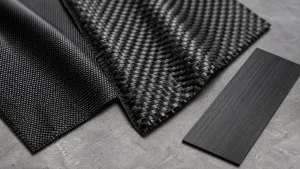
How It Differs from Woven and Multiaxial Fabrics
Unlike woven or multiaxial fabrics, unidirectional carbon fiber fabric has fibers that are not interlaced or woven together. This concentrates reinforcement and stiffness along the fiber direction, while transverse and shear properties depend on the resin system, supporting plies and laminate design. The unidirectional structure is particularly beneficial in applications where loads are primarily applied in one direction, such as in certain aerospace components or high-performance sporting goods.
The choice between unidirectional, woven, and multiaxial fabrics depends on the specific requirements of the application, including the desired mechanical properties, manufacturing constraints, and cost considerations.
The Science Behind Unidirectional Carbon Fiber
The science underlying unidirectional carbon fiber involves a complex interplay of material composition, fiber orientation, and resin compatibility, which together contribute to its remarkable properties.
Unidirectional carbon fiber fabrics are designed to maximize strength and stiffness in a single direction, making them highly suitable for applications where loads are primarily applied in one direction.
Fiber Orientation and Directional Strength
The orientation of fibers in unidirectional carbon fiber is a critical factor that determines its directional strength. By aligning fibers in a single direction, the material achieves superior tensile strength and stiffness along that axis.
Material Composition and Resin Compatibility
The composition of unidirectional carbon fiber, including the type of carbon fibers used and the resin system, plays a significant role in its overall performance. The compatibility between the fibers and the resin is crucial for ensuring effective load transfer and durability.
Physical and Chemical Properties
Unidirectional carbon fiber exhibits a range of physical and chemical properties that make it suitable for high-performance applications. These include high tensile strength, low density, and resistance to fatigue and corrosion.
The combination of these properties makes unidirectional carbon fiber an attractive material for various industries, including aerospace, defense, and automotive, where high-performance composites are in demand.
Manufacturing Process of Unidirectional Carbon Fiber
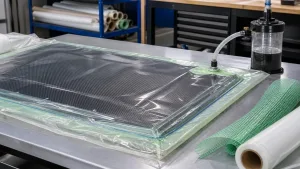
The manufacturing process of unidirectional carbon fiber is intricate, involving several critical stages from raw material selection to final product testing. This process is crucial for producing high-quality material that meets the required standards for various applications.
The production begins with the selection of raw materials, which are then processed into carbon fibers through a series of complex steps.
Raw Materials and Carbon Fiber Production
The raw materials used for producing carbon fibers include polyacrylonitrile (PAN) or pitch. These materials undergo a process known as pyrolysis, where they are subjected to high temperatures in the absence of oxygen, resulting in the formation of carbon fibers.
Alignment and Binding Techniques
Once the carbon fibers are produced, they are aligned in a single direction to create unidirectional fibers. These fibers are then bound together using a resin, such as epoxy, to form a composite material. The alignment and binding process is critical for achieving the desired mechanical properties of the final product.
Quality Control and Testing Standards
To ensure the quality of the unidirectional carbon fiber, manufacturers implement rigorous testing standards. These include tests for tensile strength, flexural strength, and interlaminar shear strength. The material is also inspected for any defects or irregularities that could affect its performance.
By controlling the manufacturing process and adhering to strict quality control measures, manufacturers can produce high-quality unidirectional carbon fiber that meets the demands of various industries, including aerospace, automotive, and sports equipment.
Key Properties and Performance Benefits
The performance benefits of unidirectional carbon fiber fabric are rooted in its superior material properties. This material has gained significant attention in various industries due to its exceptional characteristics.
Superior Tensile Strength in Load Direction
One of the primary advantages of unidirectional carbon fiber fabric is its superior tensile strength in the direction of the fibers. This property makes it particularly useful for applications where high strength is required in a specific direction.
- High tensile strength
- Improved load-bearing capacity
- Enhanced structural integrity
Weight-to-Strength Ratio Advantages
Unidirectional carbon fiber fabric offers an exceptional weight-to-strength ratio, making it an ideal choice for weight-sensitive applications. The material’s lightweight nature, combined with its high strength, provides significant advantages in various industries.
- Reduced overall weight
- Increased efficiency
- Improved performance
Fatigue Resistance and Durability
The fatigue resistance of unidirectional carbon fiber fabric is another key benefit, contributing to its durability and long-term performance. This property is particularly important in applications subject to cyclic loading or stress.
The combination of these properties makes unidirectional carbon fiber fabric a highly sought-after material for various high-performance applications.
Applications in Aerospace and Defense Industries
The use of unidirectional carbon fiber fabric has revolutionized the aerospace and defense industries with its exceptional strength-to-weight ratio. This advanced composite material is being increasingly utilized in various critical applications.
One of the primary uses of unidirectional carbon fiber fabric is in aircraft structural components. Its high tensile strength and resistance to fatigue make it an ideal material for manufacturing aircraft parts that require high durability and performance.
Aircraft Structural Components
Unidirectional carbon fiber fabric is used in the production of aircraft wings, fuselage, and other structural elements. Its ability to withstand high stresses and strains without compromising on weight is a significant advantage.
Space Vehicle Applications
In space vehicle applications, unidirectional carbon fiber fabric is valued for its lightweight and high-strength properties. It is used in the construction of satellite components, rocket structures, and other spacecraft elements where minimizing weight is crucial.
Military and Defense Equipment
The military and defense sector also benefits from the use of unidirectional carbon fiber fabric. It is employed in the manufacture of advanced military equipment, including armor, vehicle components, and other defense-related hardware.
| Industry | Application | Benefits |
|---|---|---|
| Aerospace | Aircraft Structural Components | High Strength, Low Weight |
| Space | Space Vehicle Structures | Lightweight, High Durability |
| Defense | Military Equipment | Enhanced Performance, Reduced Weight |
Automotive and Transportation Applications
Unidirectional carbon fiber fabric is revolutionizing the automotive and transportation sectors with its high-performance capabilities. This material is being increasingly used to enhance vehicle performance, reduce weight, and improve fuel efficiency.
Performance Vehicle Body Panels and Chassis
In the realm of performance vehicles, unidirectional carbon fiber fabric is used to manufacture lightweight body panels and chassis components. This not only reduces the overall weight of the vehicle but also enhances its strength and durability. High-performance composites like these are crucial in the production of sports cars and other high-end vehicles.
Commercial Transportation Weight Reduction Solutions
For commercial transportation, the focus is on weight reduction to improve fuel efficiency and reduce operational costs. Unidirectional carbon fiber fabric is being used to create lighter components for trucks and other commercial vehicles. This application of automotive carbon fiber is contributing to more economical and environmentally friendly transportation solutions.
Racing and Motorsport Innovations
In racing and motorsport, the use of unidirectional carbon fiber fabric is widespread due to its exceptional strength-to-weight ratio. It is used in the manufacture of various components, from chassis to bodywork. The high-performance composites enable race cars to achieve higher speeds while maintaining safety standards.
| Application | Benefits | Industry Impact |
|---|---|---|
| Performance Vehicle Body Panels | Reduced weight, enhanced strength | Improved vehicle performance |
| Commercial Transportation | Weight reduction, fuel efficiency | Economic and environmental benefits |
| Racing and Motorsport | Exceptional strength-to-weight ratio | Higher speeds, maintained safety |

Industrial and Consumer Product Applications
From sporting goods to medical devices, unidirectional carbon fiber fabric is transforming the way products are designed and manufactured. Its unique combination of strength, durability, and lightness makes it an ideal material for a wide range of applications.
Sporting Goods and Recreational Equipment
In the sporting goods industry, unidirectional carbon fiber fabric is used to create high-performance equipment such as bicycle frames, golf clubs, and tennis rackets. The material’s superior tensile strength and stiffness enhance the performance of these products, giving athletes a competitive edge.
Marine and Boating Applications
The marine industry benefits from the use of unidirectional carbon fiber fabric in boat hulls, masts, and other structural components. Its resistance to corrosion and ability to withstand harsh marine environments make it a preferred choice for boat manufacturers.
Medical Devices and Prosthetics
In medical applications, unidirectional carbon fiber fabric is used in prosthetic limbs, orthotics, and medical equipment. The material’s lightweight and durable properties improve the comfort and functionality of these devices, enhancing the quality of life for patients.
| Industry | Applications | Benefits |
|---|---|---|
| Sporting Goods | Bicycle frames, golf clubs, tennis rackets | Enhanced performance, reduced weight |
| Marine | Boat hulls, masts, structural components | Corrosion resistance, durability |
| Medical | Prosthetic limbs, orthotics, medical equipment | Lightweight, improved comfort and functionality |
Cost Considerations and Material Comparisons
The economic implications of choosing unidirectional carbon fiber fabric are significant and warrant a detailed examination. As industries continue to adopt advanced materials for their high-performance applications, understanding the cost dynamics becomes crucial.
Price Factors and Manufacturing Expenses
The cost of unidirectional carbon fiber fabric is influenced by several factors, including the quality of raw materials, manufacturing processes, and production volumes. High-quality carbon fibers and advanced manufacturing techniques contribute to the overall expense. Additionally, the complexity of the fabric’s design and the precision required in its production can drive up costs.
Manufacturing expenses are also affected by the scale of production. Larger production runs can reduce the cost per unit, making it more economical for high-volume applications. However, for smaller, specialized projects, the cost per unit remains higher due to the lower economies of scale.
Comparing Unidirectional vs. Other Composite Materials
When comparing unidirectional carbon fiber fabric to other composite materials, several factors come into play. Unidirectional carbon fiber offers superior tensile strength and stiffness in the fiber direction, making it ideal for applications where load-bearing capacity is critical.
| Material | Tensile Strength (MPa) | Cost ($/kg) |
|---|---|---|
| Unidirectional Carbon Fiber | 1200-1500 | 50-100 |
| Woven Carbon Fiber | 800-1200 | 40-90 |
| Glass Fiber Reinforced Polymer | 400-800 | 10-30 |
Long-term Value and Performance Benefits
While the initial cost of unidirectional carbon fiber fabric may be higher than that of other materials, its long-term value and performance benefits often justify the investment. The material’s exceptional durability and resistance to fatigue can lead to significant cost savings over the lifecycle of a product.
Reduced maintenance needs and extended service intervals contribute to lower operational costs, making unidirectional carbon fiber a cost-effective choice for many high-performance applications.

Conclusion
Unidirectional Carbon Fiber Fabric has emerged as a revolutionary material in various industries, including aerospace, automotive, and sports equipment. Its unique properties, such as superior tensile strength and weight-to-strength ratio advantages, make it an ideal choice for high-performance applications.
The use of Advanced Composite Materials like Unidirectional Carbon Fiber Fabric is transforming the way we design and manufacture products. Its ability to provide exceptional strength and durability while minimizing weight is driving innovation in various sectors.
Unidirectional carbon fiber fabric is used in applications where designers need reinforcement aligned with a known load path, including selected aerospace, vehicle and sporting-goods laminates. Its versatility and performance benefits make it an attractive material for industries seeking to push the boundaries of what is possible.
In conclusion, Unidirectional Carbon Fiber Fabric is poised to play a significant role in shaping the future of High-Performance Applications. Its unique properties and benefits make it an essential material for industries looking to innovate and stay ahead of the curve.
FAQ
What is unidirectional carbon fiber fabric?
Unidirectional carbon fiber fabric is a type of composite material where carbon fibers are aligned in one direction, providing exceptional strength and stiffness in that direction.
How does unidirectional carbon fiber differ from woven carbon fiber?
Unlike woven carbon fiber, which has fibers interlaced in multiple directions, unidirectional carbon fiber has all its fibers aligned in a single direction, offering superior tensile strength in that direction.
What are the primary applications of unidirectional carbon fiber fabric?
Unidirectional carbon fiber fabric is used in various high-performance applications, including aerospace, defense, automotive, and sporting goods, where its exceptional strength-to-weight ratio and directional strength are valuable.
How is unidirectional carbon fiber fabric manufactured?
The manufacturing process involves producing high-quality carbon fibers, aligning them in a single direction, and then binding them together using a resin, followed by quality control measures to ensure the material meets the required standards.
What are the benefits of using unidirectional carbon fiber in aerospace applications?
In aerospace, unidirectional carbon fiber is used for structural components due to its high tensile strength, low weight, and resistance to fatigue, contributing to improved aircraft performance and fuel efficiency.
Can unidirectional carbon fiber be used in automotive applications?
Yes, unidirectional carbon fiber is used in the automotive industry for performance vehicle body panels, chassis, and other components, where its high strength-to-weight ratio enhances performance and reduces weight.
How does the cost of unidirectional carbon fiber compare to other materials?
While unidirectional carbon fiber can be more expensive than some other composite materials, its long-term value lies in its performance benefits, including reduced weight and increased durability, which can lead to cost savings over time.
What are the key factors that affect the price of unidirectional carbon fiber?
The price of unidirectional carbon fiber is influenced by factors such as raw material costs, manufacturing expenses, and the complexity of the production process.
Is unidirectional carbon fiber fabric recyclable?
Recycling unidirectional carbon fiber is challenging due to the difficulty in separating the fibers from the resin, but research is ongoing to develop more effective recycling methods.
What are the future prospects for unidirectional carbon fiber fabric?
As technology advances and manufacturing costs decrease, unidirectional carbon fiber is expected to become more widely adopted in various industries, driving innovation and performance improvements in a range of applications.

Add comment