
The quest for lightweighting has become a critical aspect in various industries, from aerospace to automotive. The choice between composite materials like carbon fiber and fiberglass is pivotal in achieving this goal.
As industries strive for efficiency and performance, understanding when to opt for premium lightweight materials is crucial. This article delves into the comparison between carbon fiber and fiberglass, exploring their applications, benefits, and the scenarios where lightweighting is worth the investment.
Key Takeaways
- Understanding the importance of lightweighting in various industries.
- Comparing the properties and applications of carbon fiber and fiberglass.
- Identifying scenarios where premium lightweight materials are justified.
- Exploring the benefits and challenges of using composite materials.
- Guidance on selecting the appropriate material for specific applications.
Understanding Composite Materials
Understanding composite materials is crucial for appreciating the differences between carbon fiber and fiberglass. Composite materials are engineered to combine the benefits of different substances, resulting in materials with enhanced properties.
What Are Composite Materials?
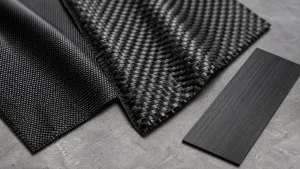
Composite materials are made from two or more constituent materials with distinct physical or chemical properties. When combined, these materials produce a composite with characteristics different from those of the individual components. The primary constituents of composite materials are matrices and reinforcements.
The Role of Matrices and Reinforcements
The matrix acts as the binder, holding the reinforcement in place and providing a medium for transferring loads. Reinforcements, on the other hand, are the strengthening elements that enhance the mechanical properties of the composite. The synergy between the matrix and reinforcement determines the overall performance of the composite material.
Key Components of Composite Materials:
- Matrix: Provides a binding medium for the reinforcement.
- Reinforcement: Enhances the mechanical properties of the composite.
Evolution of Lightweight Composites in Industry
The evolution of lightweight composites has been driven by the demand for high-performance materials in various industries. From aerospace to automotive, these materials have enabled significant advancements in technology and efficiency.
As noted by a leading materials scientist, “The development of composite materials has opened new avenues for innovation, allowing us to create structures that are not only stronger and lighter but also more versatile.”
“The future of composites is bright, with ongoing research and development aimed at creating more sustainable and efficient materials.”
The table below summarizes the evolution of composite materials in different industries:
| Industry | Application | Benefits |
|---|---|---|
| Aerospace | Aircraft structures | Weight reduction, improved fuel efficiency |
| Automotive | Vehicle body parts | Enhanced performance, reduced fuel consumption |
| Marine | Boat hulls and masts | Durability, resistance to corrosion |
In conclusion, understanding composite materials is essential for leveraging their potential in various applications. By combining different materials, composites offer unique properties that can be tailored to specific needs.
Carbon Fiber vs. Fiberglass: Material Properties Compared
Carbon fiber and fiberglass are both popular composite materials, but they exhibit different characteristics that make them suitable for various uses. Understanding these differences is key to selecting the right material for specific applications.
Strength-to-Weight Ratio
The strength-to-weight ratio is a critical factor in material selection, particularly for applications where weight reduction is essential. Carbon fiber outperforms fiberglass in this regard, offering a significantly higher strength-to-weight ratio. This means that for the same weight, carbon fiber provides greater strength and durability compared to fiberglass.
For instance, in the aerospace industry, the use of carbon fiber has enabled the construction of lighter, yet incredibly strong, aircraft components. This not only improves fuel efficiency but also enhances overall performance.
Stiffness and Flexibility
Stiffness and flexibility are other crucial properties that differentiate carbon fiber from fiberglass. Carbon fiber is notably stiffer, making it ideal for applications requiring minimal deflection under load. On the other hand, fiberglass offers more flexibility, which can be advantageous in scenarios where some degree of elasticity is beneficial.
Durability and Fatigue Resistance
Durability and resistance to fatigue are vital for materials subjected to cyclic loading or harsh environmental conditions. Carbon fiber generally exhibits superior durability and fatigue resistance compared to fiberglass, largely due to its inherent material properties and the quality of its manufacturing process.
This characteristic makes carbon fiber a preferred choice for high-performance sporting goods and automotive components that are subjected to rigorous use.
Thermal Properties
The thermal properties of a material influence its behavior under varying temperature conditions. Carbon fiber has a low coefficient of thermal expansion, which means it maintains its dimensional stability over a range of temperatures. Fiberglass, while still stable, has different thermal properties that may affect its performance in extreme temperatures.
Electrical Conductivity
Electrical conductivity is another property where carbon fiber and fiberglass differ significantly. Carbon fiber is electrically conductive, making it suitable for applications requiring this property, such as in certain aerospace and automotive designs. In contrast, fiberglass is generally non-conductive.
This distinction is crucial for designers who need to integrate electrical functionality into their products.
Manufacturing Processes and Complexity
Understanding the production methods of fiberglass and carbon fiber is essential for evaluating their suitability for various industries. The manufacturing process plays a crucial role in determining the properties and applications of these composite materials.
Fiberglass Production Methods
Fiberglass production typically involves the melting and drawing of glass into fine fibers. This process can be achieved through various methods, including:
- Centrifugal spinning
- Blown fiber process
- Direct melt process
Each method has its advantages and limitations, influencing the final product’s quality and cost.
Carbon Fiber Manufacturing Techniques
Carbon fiber production is more complex, involving the pyrolysis of precursor materials, typically polyacrylonitrile (PAN). The process includes:
- Precursor production
- Stretching and stabilization
- Carbonization
- Surface treatment
This intricate process contributes to the high cost and exceptional properties of carbon fiber.
Tooling and Equipment Requirements
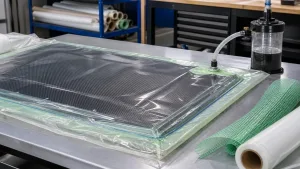
The manufacturing of composite materials requires specialized tooling and equipment. For fiberglass, this may include molds and layup tools, while carbon fiber production demands high-temperature furnaces and precise tension control systems.
Quality Control Challenges
Ensuring the quality of composite materials is challenging due to the complexity of their manufacturing processes. Factors such as fiber orientation, resin distribution, and void content must be carefully controlled.
| Material | Production Complexity | Quality Control Challenges |
|---|---|---|
| Fiberglass | Moderate | Fiber orientation, resin distribution |
| Carbon Fiber | High | Precursor quality, carbonization process |
Cost Analysis: Breaking Down the Premium
When considering carbon fiber versus fiberglass, understanding the cost implications is crucial for making an informed decision. The choice between these materials depends on various factors, including raw material costs, processing expenses, lifecycle costs, and economy of scale.
Raw Material Costs
The cost of raw materials is a significant factor in the overall expense of both carbon fiber and fiberglass. Carbon fiber, derived from polyacrylonitrile (PAN) or pitch, is generally more expensive than fiberglass, which is made from glass fibers. The price of PAN precursor, a key component in carbon fiber production, can fluctuate based on market demand and supply chain factors.

Processing and Labor Expenses
Processing and labor costs contribute substantially to the final cost of composite materials. Carbon fiber production involves complex processes like oxidation, carbonization, and surface treatment, which require specialized equipment and skilled labor. In contrast, fiberglass production is relatively less complex and less expensive.
Lifecycle Cost Considerations
Lifecycle costs encompass not only the initial material and production expenses but also maintenance, repair, and eventual disposal costs. Carbon fiber’s superior durability and resistance to fatigue can lead to lower lifecycle costs in certain applications, particularly where weight reduction yields significant performance benefits.
Economy of Scale Factors
The economy of scale plays a crucial role in reducing the cost per unit of composite materials. As production volumes increase, manufacturers can optimize processes, reduce waste, and negotiate better prices for raw materials. This effect is particularly pronounced in large-scale industrial applications.
By examining these cost factors, manufacturers and engineers can make more informed decisions about when to choose carbon fiber over fiberglass, or vice versa, based on a comprehensive understanding of the total cost of ownership.
Performance Benefits of Lightweighting
As industries strive for efficiency and sustainability, the performance benefits of lightweighting have become increasingly apparent. Lightweight materials, such as carbon fiber and advanced composites, offer significant advantages in various applications, from transportation to industrial equipment.
Fuel Efficiency in Transportation
One of the most notable benefits of lightweighting is improved fuel efficiency in vehicles. By reducing the overall weight, less energy is required to propel the vehicle, leading to lower fuel consumption and reduced emissions. Studies have shown that a 10% reduction in vehicle weight can result in a 6-8% improvement in fuel efficiency.
Energy Consumption in Moving Parts
Lightweighting also reduces energy consumption in moving parts, such as engine components and machinery. Less massive parts require less energy to accelerate and decelerate, resulting in improved efficiency and reduced wear on the components.
Handling and Response Characteristics
The use of lightweight materials can also enhance the handling and response characteristics of vehicles. With reduced weight, vehicles can accelerate faster and brake more efficiently, improving overall safety and driving dynamics.
Quantifying Weight Reduction Benefits
Quantifying the benefits of weight reduction involves analyzing various factors, including fuel savings, improved performance, and reduced maintenance costs. The following table provides a summary of potential benefits associated with different levels of weight reduction:
| Weight Reduction | Fuel Efficiency Improvement | Performance Enhancement |
|---|---|---|
| 5% | 3-5% | Improved acceleration |
| 10% | 6-8% | Enhanced handling |
| 15% | 9-12% | Significant performance gain |
By understanding the performance benefits of lightweighting, industries can make informed decisions about material selection and design optimization, ultimately leading to more efficient and sustainable products.
Industry-Specific Applications
From automotive to aerospace, and from marine to construction, carbon fiber and fiberglass are revolutionizing industries. Their unique properties make them ideal for a wide range of applications where weight reduction, strength, and durability are critical.
Automotive and Transportation
The automotive industry is one of the largest consumers of both carbon fiber and fiberglass. Performance vehicles benefit significantly from the lightweighting these materials offer, enhancing speed and handling.
Performance Vehicles
Manufacturers like BMW and Lamborghini use carbon fiber to reduce weight in their high-performance models, improving power-to-weight ratios. For instance, BMW’s i8 model features a carbon fiber chassis, significantly reducing its weight.
Mass-Market Applications
While carbon fiber is more common in luxury and performance vehicles, fiberglass is often used in mass-market applications due to its cost-effectiveness. It’s used in various components, including body panels and structural elements.
Aerospace and Aviation
The aerospace industry demands the highest standards of material performance, making carbon fiber particularly valuable due to its exceptional strength-to-weight ratio and resistance to fatigue.
Commercial Aircraft
Boeing and Airbus have incorporated carbon fiber composites in their aircraft designs to reduce weight and improve fuel efficiency. The Boeing 787 Dreamliner, for example, features a fuselage made largely from carbon fiber composite materials.
Space Applications
In space exploration, weight reduction is crucial due to the high cost of launching payloads into orbit. Carbon fiber is used in rocket structures and satellite components for its lightweight and durable properties.
Marine Applications
The marine industry uses both carbon fiber and fiberglass extensively. Fiberglass is common in boat hulls and other structural components due to its durability and resistance to corrosion.
Sporting Goods and Recreation
Carbon fiber’s lightweight and high stiffness make it ideal for sporting goods such as bicycles, golf clubs, and tennis rackets. Professional athletes often use equipment made from these advanced materials to gain a competitive edge.
Industrial Equipment
In industrial settings, the durability and resistance to fatigue of carbon fiber and fiberglass make them suitable for manufacturing equipment components, such as tanks, pipes, and machinery parts.
Construction and Infrastructure
The construction industry is beginning to adopt these materials for building structures, bridges, and other infrastructure projects. Their resistance to corrosion and ability to withstand harsh environmental conditions are significant advantages.
As industries continue to evolve, the demand for lightweight, high-performance materials like carbon fiber and fiberglass is expected to grow. Their applications across various sectors underscore their versatility and the potential for innovation in material science.
Environmental Considerations
With growing concerns about climate change, understanding the ecological footprint of carbon fiber and fiberglass is crucial. As industries strive to adopt more sustainable practices, the environmental implications of these materials must be carefully examined.
Carbon Footprint of Production
The production of carbon fiber is particularly energy-intensive, contributing to a significant carbon footprint. Estimates suggest that producing one kilogram of carbon fiber can emit between 20 to 30 kilograms of CO2, largely due to the energy required for the manufacturing process. In contrast, fiberglass production is less energy-intensive, resulting in a lower carbon footprint.
Recyclability Challenges
Both carbon fiber and fiberglass pose recyclability challenges. Carbon fiber, in particular, is difficult to recycle due to its complex manufacturing process and the strong bonds within its structure. While some methods have been developed to recycle carbon fiber, they are not yet widely adopted or economically viable. Fiberglass recycling is more established but still faces challenges in terms of cost and material quality.
End-of-Life Disposal
The disposal of composite materials at the end of their life cycle is another environmental concern. Landfill disposal is still a common practice, but it is not a sustainable long-term solution. Research into more environmentally friendly disposal methods, such as advanced recycling techniques, is ongoing.
Sustainability Innovations
Innovations aimed at improving the sustainability of carbon fiber and fiberglass are underway. These include the development of bio-based resins and more efficient manufacturing processes. Sustainability innovations are crucial for reducing the environmental impact of these materials and enhancing their appeal in eco-conscious markets.
Regulatory Landscape
The regulatory landscape surrounding composite materials is evolving. Governments are implementing stricter environmental regulations, which will likely impact the production and disposal of carbon fiber and fiberglass. Companies must stay abreast of these changes to ensure compliance and maintain their competitive edge.
Decision Framework: When to Choose Carbon Fiber
The decision to use carbon fiber hinges on several key factors that must be carefully evaluated. When considering advanced materials for a project, it’s essential to weigh the benefits against the costs and assess whether carbon fiber’s unique properties align with the project’s requirements.
Critical Performance Requirements
Projects that demand high strength, low weight, and exceptional durability often benefit from carbon fiber. For instance, in aerospace and automotive applications, the material’s ability to withstand extreme conditions while minimizing weight can be a significant advantage. Evaluating the performance requirements of your project is the first step in determining if carbon fiber is the right choice.
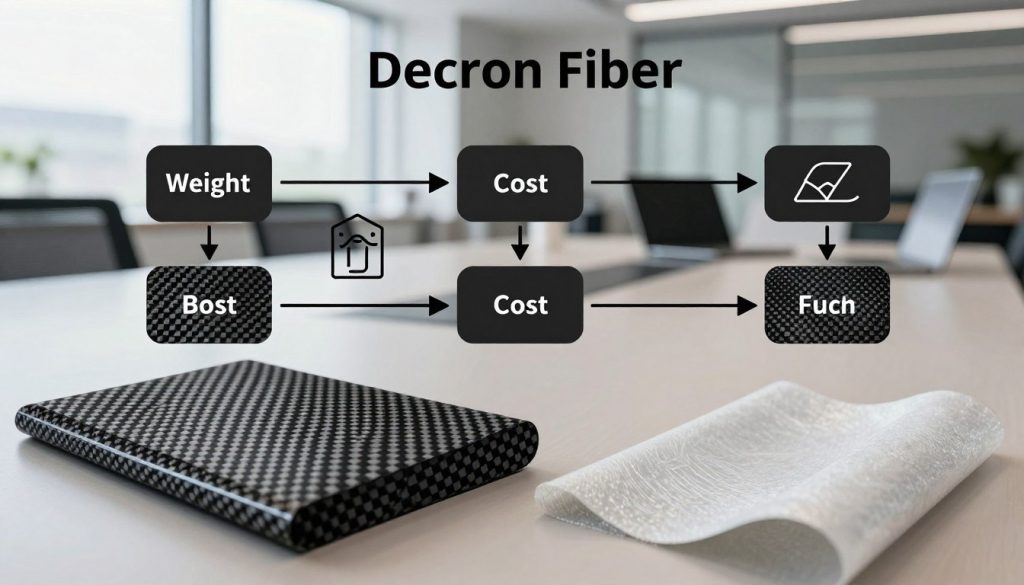
Budget Constraints and ROI Analysis
While carbon fiber offers numerous benefits, its higher cost compared to traditional materials like fiberglass can be a barrier. Conducting a thorough Return on Investment (ROI) analysis is crucial. This involves calculating the cost savings from reduced fuel consumption or increased efficiency against the higher upfront cost of carbon fiber. For many applications, the long-term benefits justify the initial expense.
Volume and Scale Considerations
The feasibility of using carbon fiber also depends on the production volume and scale. For large-scale production, the cost per unit can decrease, making carbon fiber more competitive. However, for small-scale projects, the economy of scale may not be as favorable. Understanding the production volume and its impact on cost is vital.
Hybrid Solutions
In some cases, a hybrid approach that combines carbon fiber with other materials can offer a balanced solution. This can help in achieving the desired performance while managing costs. For example, using carbon fiber in critical components and other materials for less demanding parts can be an effective strategy.
Future-Proofing Decisions
When making material choices, it’s also important to consider future-proofing. As technology advances, the production costs of carbon fiber are likely to decrease, making it more competitive. Investing in carbon fiber now can position a project for future benefits as the material becomes more cost-effective.
| Factor | Consideration | Impact on Carbon Fiber Choice |
|---|---|---|
| Critical Performance | High strength, low weight | Highly beneficial |
| Budget Constraints | Higher upfront cost | Potential barrier |
| Production Volume | Economy of scale | Favorable for large-scale |
| Hybrid Solutions | Combining materials | Cost-effective strategy |
| Future-Proofing | Advancements in technology | Potential long-term benefits |
Conclusion: Balancing Performance and Cost in Material Selection
Effective material selection is crucial in various industries, from automotive to aerospace. When deciding between carbon fiber and fiberglass, understanding the trade-offs between performance and cost is essential. The choice ultimately depends on balancing these factors to meet specific application requirements.
Carbon fiber offers superior strength-to-weight ratio and stiffness, making it ideal for high-performance applications where weight reduction is critical. However, its high cost can be a significant barrier. Fiberglass, on the other hand, provides a more cost-effective solution with acceptable performance for many applications.
To make an informed decision, consider factors such as raw material costs, processing expenses, and lifecycle cost considerations. By weighing these elements, manufacturers can determine when the premium for lightweighting is justified. Ultimately, balancing performance and cost is key to optimal material selection.
FAQ
What are the main differences between carbon fiber and fiberglass?
Carbon fiber and fiberglass differ significantly in terms of their material properties, including strength-to-weight ratio, stiffness, durability, thermal properties, and electrical conductivity.
How do the manufacturing processes of carbon fiber and fiberglass compare?
The manufacturing processes for carbon fiber and fiberglass involve different techniques, tooling, and equipment requirements, with carbon fiber generally being more complex and expensive to produce.
What are the cost implications of choosing carbon fiber over fiberglass?
Carbon fiber is typically more expensive than fiberglass due to higher raw material costs, processing, and labor expenses, but its performance benefits and potential for weight reduction can justify the premium in certain applications.
How do carbon fiber and fiberglass impact the environment?
Both materials have environmental implications, including carbon footprint, recyclability challenges, and end-of-life disposal, but sustainability innovations and regulatory efforts are underway to mitigate these concerns.
When should I choose carbon fiber over fiberglass?
Carbon fiber is a suitable choice when critical performance requirements, such as high strength-to-weight ratio or stiffness, are necessary, and when budget constraints and ROI analysis justify the premium.
Can carbon fiber and fiberglass be used together in hybrid solutions?
Yes, hybrid solutions combining carbon fiber and fiberglass can offer a balance between performance and cost, allowing for optimized material selection in various applications.
What are the industry-specific applications of carbon fiber and fiberglass?
Carbon fiber and fiberglass are used in various industries, including automotive, aerospace, marine, sporting goods, industrial equipment, and construction, with specific applications driven by their unique material properties.
How do I quantify the benefits of weight reduction with carbon fiber?
Quantifying the benefits of weight reduction with carbon fiber involves analyzing factors such as fuel efficiency, energy consumption, handling, and response characteristics, as well as considering the specific application and performance requirements.


Add comment