
—
Most carbon fiber buyers start with stock patterns. At some point, the ones building real product lines ask the next question: can you make this to our specification?
The answer is yes — but the process is more involved than ordering from a catalog, and the details matter. This guide covers what custom pattern carbon fiber fabric actually involves, what’s realistic at different order volumes, and what separates a genuine mill capable of executing OEM work from a trading company that will disappoint you two months into development.
—
## What “Custom Pattern” Actually Means
Custom carbon fiber fabric encompasses a wide range, and buyers often conflate things that are technically different:
**Custom weave pattern** (true OEM): A new interlacing design programmed into a jacquard loom — the pattern geometry itself is unique to your specification. Diamond shapes, proprietary logo-adjacent motifs, brand-specific geometric grids. The loom is programmed to your design, and no other customer gets that exact pattern. This requires the most lead time and the highest minimum run.
**Custom color / yarn blend**: Taking an existing weave pattern and changing the yarn specification — for example, substituting blue metallic wire for standard stainless wire, or using colored aramid alongside the carbon tow. The weave structure is standard; the material mix is customized. Lower minimum runs, faster development.
**Custom width or roll length**: Standard widths are 100cm and 127cm. Some production runs require different dimensions — 50cm for narrow applications, or 150cm+ for large-panel production. Mill-dependent; ask before assuming.
**Custom GSM (areal weight)**: Adjusting the yarn count or weave density to hit a specific weight target for your laminate stack calculations. More common in industrial supply than decorative applications.
Understanding which category your requirement falls into is the first step. True custom weave pattern development is a different engagement than requesting a color variant of a stock item.
—
## Carbon Fiber Weave Patterns: The Design Vocabulary
Before specifying a custom pattern, it helps to understand the weave constructions that are realistic in carbon fiber. Not every pattern that looks good on paper is feasible on a loom — the physical properties of carbon fiber tow (relatively brittle compared to textile yarns, limited in how sharply it can change direction) constrain what’s achievable.
### Feasible weave architectures for custom work
**Plain weave variants**: The simplest interlacing structure — each warp thread goes over one weft, under one, alternating. Custom work in plain weave typically involves changing yarn specification rather than pattern geometry. Very stable, good for tight-radius draping.
**Twill variants**: The familiar 2×2 twill (over 2, under 2, offset by 1) is the most common decorative carbon pattern. Custom twill work can include 3×1, 4×1, and 4×4 variants — each with different visual character and slightly different mechanical properties. 4-harness satin is a variant that produces an exceptionally smooth surface favored for cosmetic panels.
**Jacquard weave (per-thread control)**: The broadest design freedom. Jacquard mechanisms control each warp thread independently, allowing complex geometric patterns — cubes, diamonds, hexagons, brand-specific motifs — within the fabric structure. This is where most true custom pattern development happens.
**Hybrid interlacing**: Combining carbon tow with secondary yarns (metallic wire, aramid, glass) opens additional design space. A pattern that looks identical to plain weave in carbon might incorporate a metallic wire at specific intervals to create a visual grid effect without changing the primary weave structure.
### Pattern constraints specific to carbon fiber
Carbon fiber tow doesn’t bend around tight curves the way cotton or polyester does. This limits minimum bend radius in the weave — patterns with very short floats (where the yarn crosses over many threads before going under) work better than patterns requiring tight, sharp direction changes. Jacquard patterns with long, gentle geometry generally produce better fabric stability than patterns with high-frequency direction changes.
If you’re bringing a pattern reference to a mill (from textiles, from a graphic design file, from a competitor’s fabric), expect some adaptation during the feasibility review. A good mill will tell you which elements are achievable and which need modification; a less experienced one may simply say yes and deliver something that drifts from the original.
—
## The Custom Development Process: From Brief to Bulk Production
Here’s what the realistic timeline and process looks like for a proprietary pattern development project.
### Stage 1: Pattern feasibility review (Week 1–2)
You submit: a reference image, sketch, vector file, or detailed specification of the desired pattern. The mill reviews for loom feasibility — which aspects of the design are achievable, which require modification, and what the pattern repeat size will be (typically 8–25mm for commercial production runs).
Output from the mill: a modified pattern proposal, specification for fiber grade and yarn blend, and a first price/MOQ indication.
What to send for the best results:
– Vector file or high-resolution image of the pattern at scale
– Target areal weight (gsm) if known
– Fiber grade requirement (T300 standard, T700 for higher-modulus applications)
– Intended processing method (wet layup, vacuum infusion, press lamination)
– End application description (automotive, electronics, consumer goods)
### Stage 2: Sample loom trial (Week 3–5)
The pattern is programmed into the jacquard loom setup and a small trial run is woven. This produces the first physical sample — typically 2–3 meters — which is sent for your approval.
At this stage, expect:
– Some deviation from the computer rendering; physical carbon fiber behaves differently than a digital preview
– Possible color shift in metallic yarns when viewed under different lighting conditions
– Pattern repeat alignment confirmation (whether the repeat matches your specification)
Common revision scenarios: adjusting pattern scale, modifying float length for better stability, changing yarn weight for improved visual definition.
### Stage 3: Approval and production specification lock (Week 5–6)
You approve the sample. The loom setup parameters are locked and documented — this is your production specification. Future orders produce identical fabric within standard manufacturing tolerance.
### Stage 4: First production run (Week 7–10)
Full production begins. Quality control includes:
– Areal weight verification per roll (typically ±5% of specification)
– Visual pattern inspection for defects (broken wires, pattern shift, weave errors)
– Roll length accuracy
First production runs for proprietary patterns typically require 200–500m minimum to amortize the development cost. Subsequent repeat orders can sometimes be placed at lower minimums depending on the mill’s production schedule.
—
## MOQ Reality: What You Can Actually Order at Different Volumes
The minimum order for custom pattern development is dictated by economics, not arbitrary policy. Loom setup — the time required to program and calibrate the jacquard mechanism for a new pattern — has a fixed cost regardless of how much fabric is subsequently produced. That setup cost gets divided across the production run.
**Standard in-stock patterns**: 5–50m minimum depending on variant. No development cost; pattern already exists.
**Color/yarn variant of existing pattern**: 50–100m minimum typical. Requires yarn sourcing and a short setup adjustment but no pattern programming.
**Custom jacquard pattern (proprietary)**: 200–500m minimum for first run. Setup cost amortized; subsequent orders at lower minimums possible once setup is documented.
**Exclusivity arrangements**: Some buyers want not just a custom pattern but a guarantee that the pattern won’t be sold to others. Exclusivity typically requires higher volume commitments (500m+ annually) or a setup fee in lieu of volume. This is negotiable and depends on the mill’s assessment of the pattern’s commercial value.
One practical note: buyers who are in the 50–200m range and want design differentiation but can’t meet the 200m+ custom threshold often find good solutions in our specialty pattern library. We have 14+ decorative variants already in production that aren’t widely distributed — close enough to a proprietary look at standard wholesale pricing.
—
## Verifying That Your Supplier Can Actually Do Custom Work
The custom carbon fiber fabric market has a significant authenticity problem. Many suppliers claim custom capability but are actually brokers who outsource development to mills — adding margin, losing control over the process, and unable to manage technical issues when they arise.
Here’s how to separate genuine weave mills from intermediaries:
**Ask for a factory visit or video walkthrough of the weaving floor**. A real jacquard weaving facility has visible loom infrastructure — rows of looms, yarn frames, tension equipment. Anyone genuinely manufacturing fabric can show you this. A trader renting a showroom cannot.
**Request the technical contact for the development process**. In a genuine mill, you’ll be talking to a weave engineer or production supervisor about pattern feasibility. In a trading operation, you’ll get sales staff who can’t answer technical questions about float lengths, warp density, or shed geometry.
**Ask about the pattern archive**. Mills that do repeated custom work maintain a documented archive of loom programs — your approved pattern specification is a permanent record. Ask how they store and retrieve production specifications for repeat orders. A trading company cannot answer this question.
**Request documentation of previous custom work**. Not photographs of fabric (which prove nothing about their involvement in production) but loom setup records, QC reports from previous production runs, or client references willing to speak to their experience.
**Check the loom type**. Jacquard patterns require jacquard looms — ask specifically what loom equipment they run and what pattern size (number of hooks) their jacquard systems support. Standard jacquard weaving equipment has 2,688 to 10,920 hooks depending on configuration; this determines the maximum pattern complexity achievable.
—
## Processing Notes for Custom Pattern Carbon Fiber
Custom patterns introduce two processing considerations that don’t apply to standard stock fabrics.
**Pattern registration in the layup**: When visual consistency across a part or across multiple parts in a production run matters, cutting and layup must maintain consistent orientation relative to the pattern repeat. Establish a reference corner system before production — all plies cut from the same roll direction, pattern matched at mold edges where appearance is critical.
**Variation in drapeability**: Complex jacquard patterns with many interlacing points per unit area are stiffer and less drapeable than plain or twill weaves. For complex mold geometries (tight radii, double-curvature surfaces), test drapeability with the actual custom fabric before committing tooling investment. A pattern that drapes perfectly in flat panel work may wrinkle or bridge at tight features.
**Resin system verification**: This is especially important for hybrid patterns incorporating metallic wire or non-carbon secondary yarns. Always run a small infusion test with your production resin system before the main production run. Wire density and yarn surface energy affect wet-out behavior in ways that standard carbon specifications don’t capture.
—
## Starting a Custom Pattern Project with BulkComposites
We’ve been weaving decorative and structural carbon fiber fabrics since 2010. Our jacquard capability spans standard geometric patterns (in stock) through full proprietary pattern development for OEM applications.
**To start a custom pattern inquiry:**
1. Email [info@bulkcomposites.com](mailto:info@bulkcomposites.com) with your pattern reference and target specification
2. We’ll confirm feasibility and provide an indicative MOQ and pricing within 48 hours
3. Sample development begins after confirmation; first samples typically ship within 4–5 weeks
**For buyers not ready for custom development:**
Browse our specialty pattern library — 14+ decorative variants including jacquard, metallic wire, geometric, and hybrid carbon-Kevlar patterns. These ship from stock with MOQ from 5m.
WhatsApp for faster response on urgent inquiries: available via the chat on our site.
—
## Frequently Asked Questions
**Q: What is the minimum order quantity for custom pattern carbon fiber fabric?**
A: For custom jacquard pattern development (proprietary weave design), minimum first-run order is typically 200–500m depending on pattern complexity and whether exclusivity is required. Repeat orders of an approved pattern can be placed at lower minimums. Color variants of existing patterns start from 50–100m. Standard in-stock decorative patterns are available from 5m.
**Q: How long does custom carbon fiber weave pattern development take?**
A: From initial brief to first production samples: 4–6 weeks. This includes pattern feasibility review (1–2 weeks), loom setup and sample weaving (2–3 weeks), and sample shipment. Full production follows sample approval and takes 2–4 additional weeks depending on order volume. Total timeline from brief to bulk shipment: 8–12 weeks for first-time custom patterns.
**Q: Can I get exclusivity on a custom carbon fiber weave pattern?**
A: Yes. Exclusivity arrangements are available for proprietary patterns subject to minimum annual volume commitments or a setup fee in lieu of volume. Terms are project-specific — contact us with your requirements. For patterns derived from our existing design library with modifications, exclusivity terms differ from fully proprietary patterns.
**Q: What file format should I use to submit a custom pattern design?**
A: Vector format (AI, EPS, SVG) is preferred for pattern geometry. High-resolution raster (PNG/TIFF at 300+ DPI) is acceptable. Include scale reference — the actual size of one pattern repeat in millimeters. If you have a physical reference sample, we can work from photographs alongside measurements.
**Q: Is custom pattern carbon fiber fabric more expensive than standard patterns?**
A: At equivalent volumes, yes — custom development adds 15–30% to per-meter cost versus equivalent standard patterns, primarily due to amortized setup costs. At higher volumes (500m+), the premium narrows as setup costs become a smaller fraction of the total. Many buyers find the brand differentiation value exceeds the cost premium at modest production volumes.
**Q: Can custom patterns be woven in T700 fiber instead of T300?**
A: Yes for most pattern types. Standard jacquard patterns run well on T700. Patterns with very high interlacing frequency (tight pattern repeats with many direction changes) may have limited T700 availability due to the higher modulus fiber’s reduced flexibility — confirm during feasibility review. T700 adds approximately 20–35% to fiber material cost versus T300 baseline.
—
## Internal Links
– [Jacquard Carbon Fiber Fabric: The B2B Buyer’s Guide](/jacquard-carbon-fiber-fabric-wholesale-guide/) — weave construction fundamentals and supplier qualification
– [Geometric Pattern Carbon Fiber Fabric](/geometric-pattern-carbon-fiber-fabric/) — standard in-stock diamond, hex, and cube patterns
– [Decorative Carbon Fiber Fabric: Full Range](/decorative-carbon-fiber-fabric/) — complete decorative category overview and product grid
– [Carbon Fiber Vacuum Infusion Guide](/carbon-fiber-vacuum-infusion-guide/) — processing reference for custom fabrics
—
*BulkComposites — carbon fiber weave manufacturer since 2010. Custom pattern development and OEM production. Factory-direct pricing. Inquiry: [info@bulkcomposites.com](mailto:info@bulkcomposites.com)*
Related posts
Spread tow vs standard carbon fiber: technical comparison, B2B wholesale pricing, supplier evaluation checklist. Factory-direct from... Continue reading
There’s a moment every product designer knows: you’ve engineered the part perfectly, the mechanical specs are... Continue reading
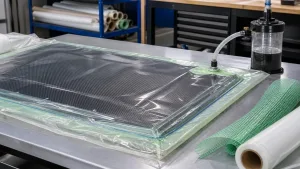
A no-nonsense guide to vacuum infusion for carbon fiber parts ? covering fabric selection, consumables setup,... Continue reading
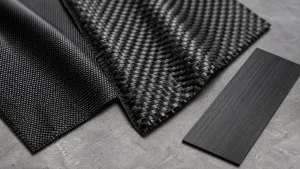
B2B wholesale guide comparing 3K, 12K, and T700 carbon fiber fabrics. Includes selection matrix, technical FAQ,... Continue reading
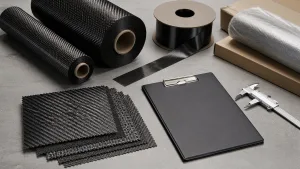
As we approach 2025, carbon fiber prices are set to shift dramatically, reflecting the soaring demand... Continue reading
Add comment