
Your guide to carbon fiber fabric types — from tow sizes to weave patterns:
From 3K twill to 12K spread tow — here is how to navigate carbon fiber fabric types, weave patterns, and fabric weights so you can walk into your next build with confidence instead of confusion.
You have spent hours watching YouTube tutorials. You have a mold ready. You bought epoxy resin. Then you open a carbon fiber fabric listing and see terms like “3K 240gsm plain weave” and “12K spread tow” — and suddenly nothing makes sense. With dozens of carbon fiber fabric types available, every DIY composite builder hits this wall. The good news: once you understand three simple properties, choosing the right fabric becomes straightforward.
Buying the wrong fabric means wasted material, poor surface finish, and parts that do not fit. A fabric that is too heavy will not drape into complex curves. A weave that is too loose will distort during layup. A tow size that is too large will look industrial instead of refined.
Choosing the right carbon fiber fabric comes down to three decisions: tow size (the thickness of each fiber bundle), weave pattern (how those bundles are interlaced), and fabric weight (grams per square meter). Each decision affects how the fabric handles during layup, how much resin it absorbs, and what the finished part looks like.
Below, we break down every factor — with real product examples you can order today.
1. Carbon Fiber Tow Sizes: 3K, 6K, and 12K Explained
The “K” in 3K, 6K, and 12K stands for “thousand” — it tells you how many individual carbon filaments are bundled into each tow (yarn). A 3K tow contains 3,000 filaments. A 12K tow contains 12,000. This number is the first thing you notice about any carbon fiber fabric because it directly controls the visual texture and handling behavior.
Smaller tow sizes (1K, 3K) produce a finer, tighter weave pattern — the kind of “classic carbon fiber look” you see on high-end automotive parts, phone cases, and luxury goods. Larger tow sizes (12K, 24K, 50K) produce a broader, more industrial pattern. They are more affordable per square meter and faster to lay up, which is why large-scale aerospace projects and composite manufacturers use them extensively.
For DIY builders, tow size is primarily an aesthetic choice — but it also affects drapability. A 3K fabric conforms to gentle curves more smoothly than a 12K fabric of the same weight, because thinner tows create more flex points across the weave. If your mold has compound curves, smaller tow sizes give you an easier layup.
3K Carbon Fiber
The most common tow size for consumer-facing carbon fiber products. 3K fabric has a tight, refined appearance with a thread count that looks dense and premium. It is the default choice for automotive interior trim, bicycle frames, drone parts, phone cases, and cosmetic carbon fiber work. At BulkComposites, our 3K fabrics range from 200gsm to 280gsm — ideal for wet layup and vacuum bagging projects where appearance matters as much as strength.
6K Carbon Fiber
A middle ground that few hobbyists use. 6K tows are wider than 3K, producing a visibly coarser pattern, but not as broad as 12K. You will find 6K fabrics in mid-range sporting goods and structural applications where builders want a balance between layup speed and surface finish. If 3K feels too expensive and 12K feels too rough, 6K is worth testing.
12K Carbon Fiber
Twelve thousand filaments per tow produce a bold, wide weave pattern. 12K fabrics cost less per square meter than equivalent 3K fabrics because fewer weaving operations are needed. They are the go-to choice for structural parts where the carbon fiber will be painted or hidden — chassis components, internal brackets, and large flat panels. Our 12K spread tow fabrics take this further by flattening the tow into a thin ribbon, creating an ultra-smooth surface with minimal resin absorption.
The table below summarizes the key differences:
| Tow Size | Filaments per Tow | Visual Pattern | Drapability | Typical Price (per m²) | Best For |
|---|---|---|---|---|---|
| 1K | 1,000 | Ultra-fine, almost smooth | Excellent | $60–100+ | Aerospace, jewelry, ultra-light parts |
| 3K | 3,000 | Classic tight carbon look | Very good | $30–65 | Auto trim, bike frames, phone cases, cosmetic work |
| 6K | 6,000 | Medium texture | Good | $25–50 | Sporting goods, mid-range structural parts |
| 12K | 12,000 | Bold, wide pattern | Moderate | $20–45 | Structural panels, industrial parts, painted surfaces |
| 24K+ | 24,000+ | Very coarse, industrial look | Limited | $15–35 | Heavy structural, wind turbine, marine hull |
2. Weave Types: Plain, Twill, and Satin Compared
Weave pattern is the second major decision — and for most DIY builders, it matters more than tow size. The weave determines how the fabric drapes, how much it distorts during handling, and what the final surface looks like. There are three primary weaves in carbon fiber fabric: plain, twill, and satin. Each has distinct strengths and trade-offs.
Carbon fiber fabric weave is the interlacing pattern of warp (longitudinal) and weft (transverse) tows. Plain weave alternates every tow over-under. Twill weave skips one or more tows, creating a diagonal pattern. Satin weave skips multiple tows, producing an ultra-smooth surface with minimum crimp. The number of tows a yarn passes over before going under — called the “float” — is what distinguishes these patterns.
Plain Weave (1×1)
Every warp tow goes over one weft tow, then under the next — a simple alternating pattern that looks like a checkerboard. Plain weave is the most stable option: tows lock into place tightly, which means the fabric resists distortion during cutting and handling. This stability comes at a cost — the frequent over-under crimp makes the fabric stiffer and harder to drape around tight curves.
Plain weave fabrics have a uniform, matte appearance. The surface texture is slightly rougher than twill because every tow bends at every intersection. For flat panels, mold surfaces, and parts where you want maximum dimensional stability during layup, plain weave is the safest choice. It is also the most forgiving for beginners — the fabric stays where you put it.
Twill Weave (2×2, 4×4)
Twill weave passes each tow over two or more perpendicular tows before going under one, creating the diagonal rib pattern that most people associate with carbon fiber. A 2×2 twill (over two, under two) is the industry standard for cosmetic carbon fiber work. The longer floats give the fabric better drapability than plain weave — it conforms to compound curves with less effort and fewer wrinkles.
The visual effect is also different: twill weave reflects light along its diagonal lines, producing the deep, three-dimensional “wet look” that makes carbon fiber parts look expensive. This is why nearly every carbon fiber phone case, laptop skin, and automotive trim piece uses a 2×2 twill. At BulkComposites, the 3K 280gsm V-Twill takes this further with a mirrored pattern that creates a striking center-line symmetry.
Satin Weave (4-harness, 8-harness)
Satin weaves float each tow over four to eight perpendicular tows before going under one. This maximizes surface smoothness — fewer crimps mean fewer light-scattering points. Satin fabrics drape exceptionally well and are the preferred choice for complex aerodynamic surfaces like drone wings, motorcycle fairings, and curved body panels.
The trade-off is stability. Satin weave fabrics are looser than plain or twill. They can shift and distort during wet layup if you are not careful with your roller technique. For beginners, satin weave can be frustrating — but for experienced builders working with vacuum bagging, it produces the smoothest surface finish with the least post-processing.
| Weave Type | Pattern | Drapability | Stability | Surface Finish | Beginner-Friendly | Best Use Case |
|---|---|---|---|---|---|---|
| Plain (1×1) | Checkerboard, over-under | Low | Excellent | Matte, uniform | Yes — very stable | Flat panels, structural parts, first project |
| Twill (2×2) | Diagonal rib, over-two-under-two | Good | Good | Deep, glossy diagonal | Yes — balanced | Automotive, cosmetic, general purpose |
| Twill (4×4) | Wider diagonal, over-four-under-four | Very good | Moderate | Pronounced diagonal pattern | Moderate | Larger parts, medium curves |
| Satin (4HS) | Over-four-under-one, staggered | Very good | Moderate | Smooth, minimal texture | Moderate | Contoured parts, drone wings, fairings |
| Satin (8HS) | Over-eight-under-one, staggered | Excellent | Low — needs care | Ultra-smooth, near-gloss | No — advanced only | Complex molds, aerospace, vacuum bagging |
3. Fabric Weight: What gsm Means for Your Project
Fabric weight — measured in grams per square meter (gsm or g/m²) — tells you how heavy the fabric is and, by extension, how thick each layer will be after lamination. A 200gsm fabric will produce a thinner, lighter laminate than a 400gsm fabric, assuming the same number of layers. This number is not cosmetic — it determines part weight, resin consumption, and how many layers you need to hit your target thickness.
For DIY builders, weight is the variable most likely to cause problems if chosen incorrectly. Here is why: heavier fabrics absorb more resin per square meter. A 400gsm fabric can consume nearly twice as much epoxy as a 200gsm fabric of the same weave type. If you only bought one liter of resin for a project that needs 1.5 liters, you will find out mid-layup — and that is not a problem you can fix on the fly.
Lightweight (80–200gsm)
Thin, flexible fabrics that drape easily around tight radii. Lightweight fabrics are ideal for skin layers — the outer visible ply on cosmetic parts — because they produce a smooth surface with minimal print-through. They are also used for reinforcing thin-walled parts, adding stiffness to foam-core structures, and as the first layer in multi-ply laminates. At 80gsm, our 12K Spread Tow fabric is one of the lightest options available — it creates a near-paper-thin carbon layer with a mirror-like surface when vacuum bagged.
Medium Weight (200–300gsm)
The sweet spot for most DIY projects. Fabrics in this range provide enough thickness per layer to build up a structural laminate in 3–5 plies while remaining workable with hand layup techniques. At 200gsm, you get approximately 0.25mm of thickness per cured ply. At 280gsm, roughly 0.35mm. For a typical phone case (target thickness 1.5mm), you need 5–6 layers of 200gsm fabric or 4 layers of 280gsm — a meaningful difference in labor, resin, and final weight.
Heavyweight (300–650gsm)
Thick fabrics for structural applications where build speed matters more than surface finish. One layer of 450gsm fabric is equivalent to roughly two layers of 200gsm — but it is stiffer, harder to wet out completely, and requires more resin per pass. Heavyweight fabrics are used for chassis reinforcements, boat hull stringers, and tooling boards. They are not recommended for cosmetic work because the thick tows produce visible texture on the surface.
The table below gives a practical weight selection reference:
| Fabric Weight | Approx. Ply Thickness | Resin per m² (approx.) | Drapability | Typical Application |
|---|---|---|---|---|
| 80–120gsm | 0.10–0.15mm | 80–120g | Excellent | Skin layers, thin reinforcement, spread tow parts |
| 160–200gsm | 0.20–0.25mm | 160–200g | Very good | Drone frames, cosmetic outer plies, RC car bodies |
| 240–280gsm | 0.30–0.35mm | 240–280g | Good | Phone cases, bike parts, general DIY, automotive trim |
| 300–400gsm | 0.38–0.50mm | 300–400g | Moderate | Structural panels, tooling, flat reinforcement |
| 450–650gsm | 0.55–0.80mm | 450–650g | Low | Marine stringers, chassis, heavy structural |
4. Matching Fabric to Your Project Type
Now that you understand tow size, weave, and weight independently, the real skill is combining them for your specific project. Most buying mistakes happen because builders pick one variable correctly and ignore the others. A 3K 200gsm plain weave and a 3K 200gsm twill weave are entirely different materials in practice — one fights you on curves, the other conforms easily.
Phone Cases & Small Cosmetic Parts
You want a tight, refined look with minimal texture. A 3K 200–240gsm 2×2 twill is the gold standard for phone cases, laptop skins, and small decorative panels. The twill pattern creates depth, the moderate weight builds thickness in fewer layers, and the 3K tow size produces a fine grain that looks premium when clear-coated. For the outer visible layer, consider a carbon fiber beginner guide recommendation: use one cosmetic twill ply over 3–4 backing plies of plain weave for the best balance of looks and cost.
Automotive Interior & Exterior Trim
Automotive parts need a combination of appearance and moderate structural strength. A 3K 240–280gsm twill weave handles this perfectly. Interior trim pieces (dash panels, shift knobs, door inserts) benefit from V-twill or specialty weaves that catch light in interesting ways. For exterior parts like mirror caps and spoilers, add one extra ply beyond your structural calculation — UV exposure and temperature cycling are harder on composites than people expect.
Drone Frames & RC Components
Weight is everything here. A 3K 160–200gsm plain or twill weave strikes the best balance between stiffness and gram-counting. For arms and frame plates, plain weave’s dimensional stability keeps your cut parts accurate. For fuselage shells with compound curves, switch to twill or satin for easier draping. If you are vacuum bagging, the 12K spread tow fabrics at 80gsm produce incredibly stiff, light skins with minimal resin weight.
Structural & Functional Parts
When appearance is secondary to strength, 12K fabrics in heavier weights (300–400gsm) make economic sense. They cost less, lay up faster, and deliver the same tensile and flexural properties per ply thickness. Plain weave is recommended for flat structural panels because it resists distortion during resin infusion. If the part will be painted or hidden, do not pay the premium for 3K — the extra cost buys you nothing functional.
General DIY & Learning Projects
If you have never worked with carbon fiber before, start with a 3K 200gsm 2×2 twill. It is forgiving enough to reposition during wet layup, stable enough that it will not unravel at the edges, and the finished result looks impressive — which matters when you have invested hours in your first project. Our wholesale carbon fiber fabric guide covers more detail on material grades if you are planning a larger production run.
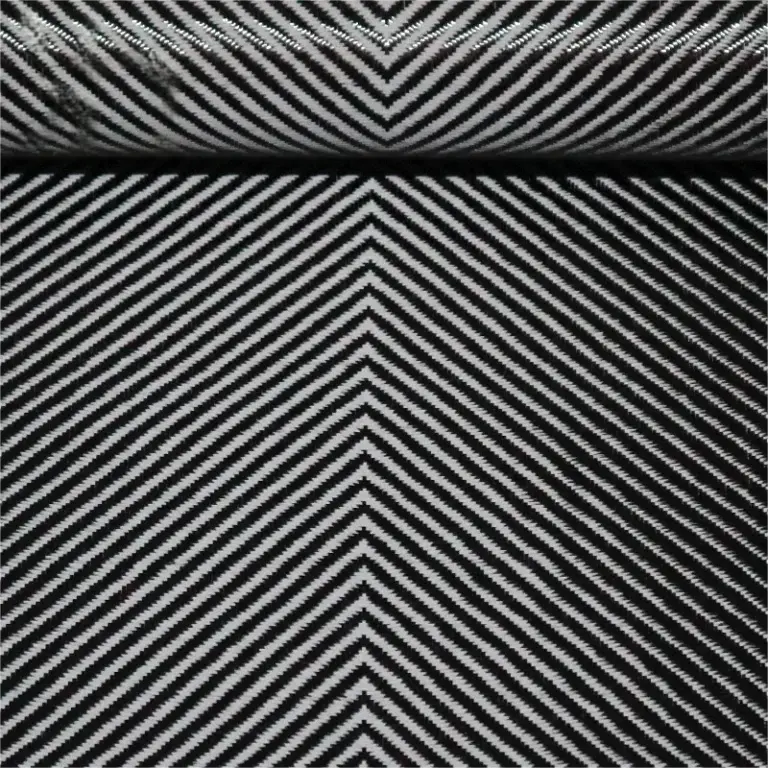
3K 280gsm V Twill 100% Carbon Fiber Cloth
Premium V-Twill weave with a unique mirrored pattern — perfect for automotive interior trim, phone cases, and high-visibility DIY projects where appearance is everything.
280 gsm
3K Tow
V-Twill
1m Width
View Full Specs →
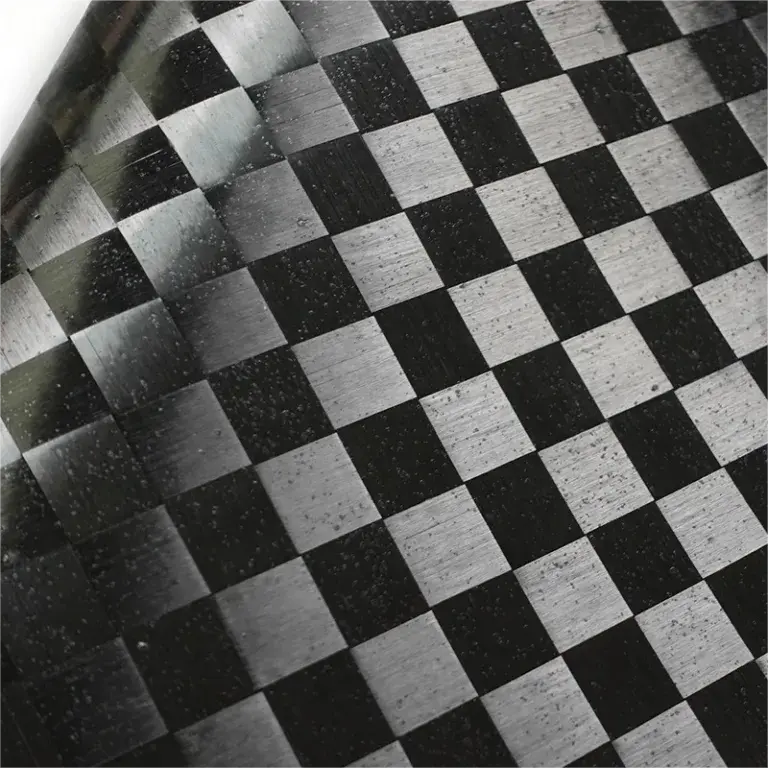
12K 80g 20x20mm Spread Tow Carbon Fiber Fabric
Ultra-thin spread tow fabric at just 80gsm — produces a mirror-smooth surface with minimal resin absorption. Ideal for drone skins, lightweight reinforcement, and vacuum bagged cosmetic layers.
80 gsm
12K Spread Tow
20x20mm Grid
1m Width
View Full Specs →
5. How to Read a Carbon Fiber Spec Sheet
Every carbon fiber fabric listing includes a handful of numbers beyond tow size and weight. These numbers come from standardized tests — mostly ASTM D-series methods — and they tell you whether the fabric meets the mechanical requirements of your project. You do not need to memorize every test standard, but knowing the four most common ones will help you compare fabrics across different suppliers.
Tensile Strength (ASTM D3039)
Measured in megapascals (MPa) or gigapascals (GPa), this is the maximum stress the fiber can withstand before breaking. Standard-modulus carbon fiber (T300-grade) delivers around 3.5 GPa. Intermediate-modulus (T700–T800) reaches 4.9–5.5 GPa. For DIY projects, standard modulus is more than sufficient — the epoxy matrix usually fails before the fiber does. Paying extra for T700 fabric on a phone case gains you nothing practical.
Tensile Modulus (ASTM D3039)
Measured in GPa, this is the stiffness of the fiber — how much it resists stretching under load. Standard modulus is 230–240 GPa. High-modulus fibers (400+ GPa) are used in aerospace and high-end sporting goods but cost 3–5× more. They are also more brittle and harder to cut cleanly.
Fabric Areal Weight (ASTM D3776)
This is the gsm number discussed in Section 3. Always verify this against your build plan — a supplier listing “240gsm” with a ±5% tolerance could deliver fabric at 228gsm or 252gsm, which changes your layer count and resin calculation.
Fiber Density
Carbon fiber density is approximately 1.8 g/cm³ — roughly one-quarter the density of steel (7.85 g/cm³) and 40% lighter than aluminum (2.7 g/cm³). This density advantage is what makes carbon fiber the dominant material for weight-critical applications. When you compare a carbon fiber part to its metal equivalent, the weight savings come from this density difference multiplied by the strength-to-weight ratio of the fiber reinforcement.
Before You Buy Carbon Fiber Fabric: A Checklist
FAQ
What is the difference between 3K and 12K carbon fiber fabric?
3K fabric uses tows of 3,000 carbon filaments each, producing a tight, fine weave pattern — the classic carbon fiber look. 12K fabric uses 12,000-filament tows, creating a visibly wider pattern. 3K is the standard for cosmetic and consumer-facing parts (phone cases, automotive trim). 12K is more cost-effective for structural parts, painted surfaces, and industrial applications. Mechanically, both deliver similar strength per cross-sectional area — the difference is aesthetic and handling behavior.
Which weave pattern should I choose as a beginner?
A 2×2 twill weave in 3K at 200–240gsm is the most forgiving choice for first-time carbon fiber builders. Twill drapes better than plain weave around moderate curves, resists fraying at cut edges better than satin, and produces an attractive diagonal finish that looks professional even with imperfect technique. Avoid 8-harness satin weaves until you have completed at least 3–5 projects — they shift easily during wet layup and require confident handling.
How many layers of carbon fiber do I need for a strong part?
For a rigid cosmetic part like a phone case, 4–6 layers of 200–240gsm fabric produce a finished thickness of approximately 1.2–1.5mm — stiff enough to feel solid without being bulky. For structural parts, calculate thickness based on your load requirements: each ply of 200gsm fabric adds roughly 0.25mm, each ply of 280gsm adds roughly 0.35mm. Multiply by your required thickness, then add one extra layer as a safety margin.
Do I need vacuum bagging for carbon fiber fabric?
No — wet layup (brushing epoxy onto fabric by hand, then letting it cure under atmospheric pressure) produces functional parts. However, vacuum bagging improves fiber-to-resin ratio from approximately 40:60 (wet layup) to 60:40 or better, yielding parts that are 20–30% lighter and 10–15% stronger for the same number of plies. If weight and maximum strength matter, vacuum bagging is worth the additional equipment. For cosmetic parts, wet layup followed by clear coating is often sufficient.
How much carbon fiber fabric do I need for my project?
Calculate the surface area of your mold (length × width in meters), then add at least 15% for trimming, overhang, and waste. Multiply that area by your planned number of plies. For example, a mold measuring 0.3m × 0.2m = 0.06m². With 5 plies and 15% waste: 0.06 × 5 × 1.15 = 0.345m². Round up to the next half-meter. Always order fabric by the linear meter at your required width — most suppliers, including BulkComposites, sell by the running meter at a fixed width (typically 1 meter).
Key Takeaways
- Pick tow size first: 3K for visible cosmetic work, 12K for structural or painted parts where cost matters more than grain pattern.
- Match weave to your mold complexity: plain weave for flat panels, 2×2 twill for general use and moderate curves, satin for complex aerodynamic shapes.
- Choose weight based on your layer budget: 200gsm gives you ~0.25mm per ply with 5–6 plies for a typical part; 280gsm gives ~0.35mm per ply with fewer layers needed.
- Budget your resin at a 1:1 fabric-to-resin weight ratio for wet layup — buying extra is always cheaper than running out mid-project.
- For your first project, a 3K 200gsm 2×2 twill is the safest starting point that still produces a professional-looking result.
Browse our full carbon fiber fabric collection → — Find 3K, 12K, plain, twill, and spread tow fabrics in weights from 80gsm to 650gsm. Every listing includes real product photos and detailed specs.

Add comment