
Understanding carbon fiber fabric sheets is crucial for wholesale businesses to make informed decisions.
Interpreting specification sheets can be challenging, but it’s essential for sourcing high-quality materials.
Being able to accurately read these specs can help businesses avoid costly mistakes and ensure they’re getting the right product for their needs.
With the right knowledge, wholesale businesses can confidently navigate the complex world of wholesale carbon fiber.
Key Takeaways
- Understand the importance of reading carbon fiber fabric specification sheets
- Learn how to identify key specs and characteristics
- Discover how to avoid common mistakes when sourcing carbon fiber materials
- Gain confidence in navigating the wholesale carbon fiber market
- Make informed decisions with accurate knowledge of carbon fiber specs
The Fundamentals of Carbon Fiber Technology
The emergence of carbon fiber technology has marked a new era in material science, characterized by enhanced performance and versatility. At its core, carbon fiber technology involves the production and application of carbon fibers, which are known for their exceptional strength-to-weight ratio.
What Makes Carbon Fiber a Premium Material
Carbon fiber is considered a premium material due to its unique combination of properties, including high tensile strength, low weight, and resistance to fatigue. These characteristics make it an ideal choice for industries such as aerospace, automotive, and sports equipment manufacturing. The use of carbon fiber can significantly enhance the performance and efficiency of products, justifying its premium status.
Why Specifications Matter for Wholesale Businesses
For wholesale businesses dealing with carbon fiber products, understanding the specifications is crucial. Accurate interpretation of these specifications can directly impact product quality and business profitability. Specifications provide detailed information about the material’s properties, such as weave pattern, fiber type, and mechanical properties. By carefully reviewing these specifications, businesses can ensure they are sourcing high-quality materials that meet their customers’ needs.
Moreover, being well-versed in carbon fiber specifications enables wholesale businesses to negotiate effectively with suppliers, identify potential issues, and make informed decisions. This knowledge is key to maintaining a competitive edge in the market and delivering value to customers.
The Anatomy of a Carbon Fiber Specification Sheet
To navigate the complex world of carbon fiber, one must first understand the anatomy of its specification sheet. A typical specification sheet is a detailed document that outlines the material’s properties, characteristics, and potential applications. It serves as a critical guide for businesses looking to source high-quality carbon fiber materials.
Standard Information Categories
Most carbon fiber specification sheets include standard information categories such as material type, fiber orientation, weight, and thickness. These categories provide a foundation for understanding the material’s basic properties. For instance, the material type might be listed as “high-strength carbon fiber,” while the fiber orientation could be described as “unidirectional” or “plain weave.”
Manufacturer-Specific Details
Beyond the standard categories, manufacturers often include specific details about their products, such as proprietary weaving techniques or unique resin systems. These details can be crucial in determining the suitability of the material for specific applications. As one expert notes, “The devil is in the details when it comes to carbon fiber specification sheets.”
“The specification sheet is a map to the material’s potential; understanding it is key to unlocking its true value.”
Red Flags and Quality Indicators
When reviewing a carbon fiber specification sheet, watch for vague or missing information, inconsistent units and test results without a method, specimen or lot. Better evidence includes a controlled data sheet, batch traceability and a scope-matched laboratory report. Verify the issuer and revision before using the values in a design or purchase specification.
By understanding the anatomy of a carbon fiber specification sheet, businesses can better navigate the complexities of sourcing high-quality materials. This knowledge empowers them to make informed decisions, ensuring that their final products meet the required standards of performance and reliability.
Types of Carbon Fiber Fabric Sheets in the Market
Understanding the different types of carbon fiber fabric sheets is crucial for making informed decisions in wholesale purchasing. The market offers a variety of carbon fiber fabrics, each designed to meet specific manufacturing needs and applications.
Dry Fabric vs. Pre-impregnated Sheets
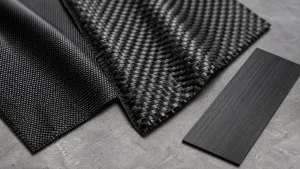
Carbon fiber fabric sheets are primarily categorized into dry fabric and pre-impregnated (prepreg) sheets. Dry fabric requires the application of resin during the manufacturing process, offering flexibility in resin selection. In contrast, prepreg sheets come with resin already applied, simplifying the manufacturing process but limiting resin choice.
Standard vs. Custom Specifications
Carbon fiber fabric sheets are available in both standard and custom specifications. Standard specifications cater to general industrial needs, while custom specifications allow for tailored solutions to meet specific project requirements. Customization can include variations in weave pattern, fiber type, and areal weight.
Industry-Specific Variations
Different industries require specialized carbon fiber fabric sheets. For instance, the aerospace industry demands high-modulus, ultra-lightweight fabrics, while the automotive industry may prioritize cost-effective, high-strength materials. Understanding these industry-specific variations is key to selecting the right product.
| Industry | Typical Requirements | Common Carbon Fiber Type |
|---|---|---|
| Aerospace | High modulus, ultra-lightweight | High Modulus Carbon Fiber |
| Automotive | High strength, cost-effective | Standard Modulus Carbon Fiber |
| Sports Equipment | Balanced strength and flexibility | Intermediate Modulus Carbon Fiber |
Decoding Weave Patterns and Their Applications
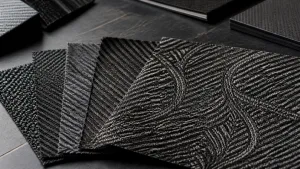
The weave pattern of carbon fiber fabric significantly influences its performance and suitability for various industries. Weave patterns affect not only the mechanical properties of the final product but also its aesthetic appeal.
Plain Weave vs. Twill Weave
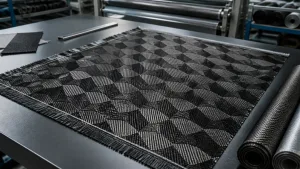
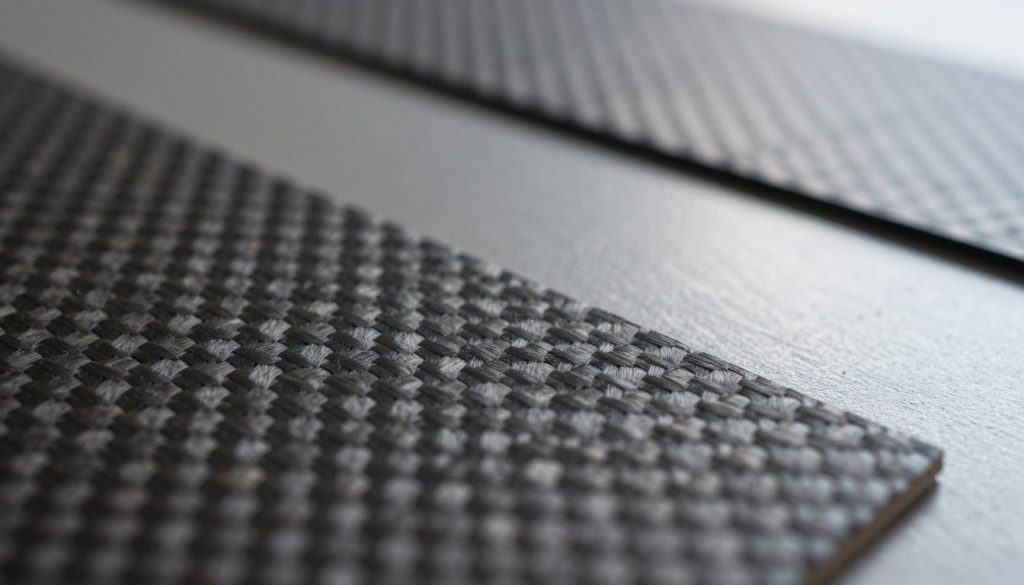
Plain weave is one of the most common weave patterns, characterized by its simple over-and-under pattern. It offers good stability and is relatively easy to handle. On the other hand, twill weave has a more complex pattern, with the weft yarn crossing over two or more warp yarns. This gives twill weave better drapeability and a more subtle texture.
Unidirectional and Specialty Weaves
Unidirectional weave features fibers oriented in one direction, providing maximum strength and stiffness in that direction. It’s ideal for applications where load is primarily in one axis. Specialty weaves, such as satin weaves, offer a balance between the properties of plain and twill weaves, with better surface finish and reduced crimp.
Selecting the Right Weave for Specific Industries
Different industries require different weave patterns based on their specific needs. For instance, the aerospace industry often uses unidirectional weaves for their high strength-to-weight ratio, while the automotive industry might prefer twill or satin weaves for their aesthetic appeal and balanced mechanical properties.
| Industry | Preferred Weave Pattern | Reason |
|---|---|---|
| Aerospace | Unidirectional | High strength-to-weight ratio |
| Automotive | Twill/Satin | Aesthetic appeal and balanced properties |
| Sports Equipment | Plain Weave | Good stability and ease of handling |
Understanding Fiber Types and Grades
Understanding the different types and grades of carbon fibers is crucial for selecting the right material for specific applications. Carbon fibers are categorized based on their modulus, which is a measure of their stiffness.
Standard Modulus vs. Intermediate Modulus
Standard modulus carbon fibers offer a good balance between stiffness and cost, making them suitable for a wide range of applications. Intermediate modulus fibers provide a higher stiffness than standard modulus fibers, offering improved performance in applications where weight and strength are critical.
High Modulus and Ultra-High Modulus Fibers
High modulus and ultra-high modulus fibers are designed for applications requiring exceptional stiffness and minimal deformation. These fibers are typically used in high-performance aerospace and sports equipment.
Tow Size and Its Impact on Performance
The tow size of carbon fibers, which refers to the number of filaments in a tow, affects the material’s processing and performance. Smaller tow sizes can provide better surface finish and mechanical properties, while larger tow sizes can be more cost-effective for certain applications.
Interpreting Mechanical Properties on Specification Sheets
Understanding the mechanical properties of carbon fiber materials is crucial for making informed decisions in wholesale businesses. These properties provide insights into how the material will perform under various conditions, ensuring that the chosen product meets the required specifications for its intended application.
Tensile Strength and Modulus
Tensile strength refers to the maximum stress a material can withstand while being stretched before failing. In carbon fiber specification sheets, tensile strength is typically measured in megapascals (MPa) or gigapascals (GPa). A higher tensile strength indicates a more durable material.
The tensile modulus, on the other hand, measures the material’s stiffness or resistance to deformation under tensile stress. It’s an essential property for applications where rigidity is critical. The modulus is also measured in GPa, with higher values indicating greater stiffness.
Compressive Properties
Compressive properties are equally important, as they indicate how the material performs under compressive forces. The compressive strength and modulus are critical for applications where the material will be subjected to compressive loads. Understanding these properties helps in selecting the right material for specific use cases.
Flexural Strength and Fatigue Resistance
Flexural strength measures the material’s ability to withstand bending forces without failing. It’s a crucial property for applications where the material will be subjected to flexural loads. Additionally, fatigue resistance indicates how well the material can endure repeated loading and unloading cycles without failing.
By carefully examining these mechanical properties on carbon fiber specification sheets, businesses can make informed decisions and ensure that the materials they procure meet the necessary performance criteria for their applications.
Weight and Thickness Specifications
The weight and thickness of carbon fiber fabrics are critical factors that influence the overall performance and durability of composite materials. Understanding these specifications is essential for manufacturers to ensure their products meet the required standards.
Fabric Areal Weight (FAW) Explained
Fabric Areal Weight (FAW) is a measure of the weight of carbon fiber fabric per unit area, typically expressed in grams per square meter (g/m²). FAW is a crucial parameter as it directly affects the final product’s weight, strength, and cost. A higher FAW generally indicates a thicker, heavier fabric with potentially greater strength.
Understanding Thickness Tolerances
Thickness tolerances refer to the acceptable variations in the thickness of carbon fiber fabrics. These tolerances are vital for ensuring that the fabric can be properly integrated into the manufacturing process without compromising the final product’s quality. Tight tolerances are particularly important in applications where precision is critical.
How Weight Affects Final Product Performance
The weight of carbon fiber fabric significantly impacts the final product’s performance. Lighter fabrics can lead to reduced overall weight, improving fuel efficiency in aerospace and automotive applications. Conversely, heavier fabrics might be chosen for their enhanced strength and durability. Understanding the trade-offs is key to selecting the appropriate fabric for specific applications.
Resin Compatibility and Processing Requirements
Resin compatibility plays a vital role in determining the performance and durability of carbon fiber products. The right resin system can enhance the mechanical properties of carbon fiber fabric, while an incompatible resin can lead to suboptimal performance or even product failure.
Compatible Resin Systems
Carbon fiber fabrics can be used with various resin systems, including epoxy, polyester, and vinyl ester. Epoxy resins are commonly used due to their excellent mechanical properties and chemical resistance. The choice of resin depends on the specific application, environmental conditions, and desired product characteristics.
- Epoxy resins for high-performance applications
- Polyester resins for cost-effective solutions
- Vinyl ester resins for corrosion resistance
Curing Cycles and Temperature Ranges
The curing process is critical in achieving the desired properties of the final product. Different resin systems have specific curing cycles and temperature ranges. For instance, epoxy resins typically require a curing temperature between 250°F to 350°F (120°C to 175°C). Understanding these requirements is essential for optimizing the manufacturing process.
Processing Methods and Equipment Needs
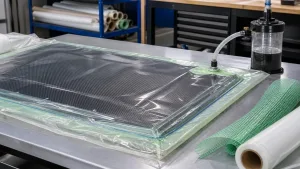
The processing method used can significantly impact the quality of the final product. Common processing methods include vacuum infusion, resin transfer molding (RTM), and autoclave curing. Each method has its advantages and requires specific equipment. For example, vacuum infusion is a cost-effective method that requires a vacuum pump and bagging materials, while autoclave curing provides high-quality parts but requires an autoclave.
By understanding resin compatibility and processing requirements, manufacturers can optimize their production processes, ensuring high-quality carbon fiber products that meet specific application needs.
International Standards and Unit Conversions
Understanding international standards and unit conversions is crucial for navigating the complex world of carbon fiber fabrics. As the industry continues to globalize, being familiar with these standards ensures that businesses can communicate effectively with suppliers and manufacturers worldwide.
Common Standards Organizations
Several key organizations play a significant role in establishing standards for carbon fiber materials. These include:
- ASTM (American Society for Testing and Materials): Known for its comprehensive standards that cover a wide range of materials, including carbon fiber.
- ISO (International Organization for Standardization): Develops and publishes international standards for various industries, ensuring global compatibility.
- JIS (Japanese Industrial Standards): While more regional, JIS is crucial for businesses operating in or with Japan, providing standards that are often adopted beyond its borders.
As Tom Smith, a leading industry expert, once said,
“Adhering to international standards is not just about compliance; it’s about ensuring the quality and reliability of your products in a global market.”
Converting Between Imperial and Metric Units
Carbon fiber specifications often require conversions between imperial and metric units. For instance, fabric areal weight might be given in g/m² or oz/yd². Understanding these conversions is vital for accurately comparing products from different suppliers.
Regional Legal and Customer Requirements
Do not assume there is a single EU, US or ASTM approval for every carbon fiber fabric. Requirements depend on product form, intended use, market, customer drawing and any sector-specific rules. Confirm the current document set with the customer, a qualified laboratory and the relevant authority before shipment.
Record the exact standard edition, units, sampling plan and acceptance criteria in the purchase specification. This makes supplier comparisons clearer and reduces the risk of testing the wrong material form or property.
Comparing Specification Sheets Between Manufacturers
The ability to effectively compare carbon fiber specification sheets from multiple manufacturers is a valuable skill in the wholesale industry. As businesses navigate the complex landscape of carbon fiber sourcing, understanding the nuances between different manufacturers’ specifications can lead to better procurement decisions.
Creating Standardized Comparison Charts
To facilitate a thorough comparison, creating standardized charts can be incredibly helpful. By listing key specifications such as tensile strength, modulus, and fabric areal weight across different manufacturers, businesses can easily identify similarities and differences. This process involves:
- Identifying the most critical specifications for your application
- Gathering specification sheets from various manufacturers
- Organizing the data into a comparable format
Identifying Equivalent Products
Once the data is organized, businesses can identify equivalent products across different manufacturers. This is particularly useful for maintaining supply chain flexibility or when a preferred manufacturer’s product is unavailable. By comparing key performance metrics, businesses can confidently substitute one product for another.
Negotiating with Suppliers Using Specification Knowledge
Armed with a comprehensive understanding of how different manufacturers’ products compare, businesses are in a stronger position to negotiate with suppliers. This knowledge can be used to request competitive pricing, discuss custom specifications, or secure more favorable delivery terms. Effective negotiation can lead to cost savings and improved supply chain reliability.
By mastering the art of comparing specification sheets, businesses can make more informed decisions, optimize their procurement processes, and ultimately gain a competitive edge in the market.
Conclusion: Leveraging Specification Knowledge for Wholesale Success
Mastering carbon fiber fabric specification sheets is a crucial step towards achieving wholesale success in the industry. By understanding the intricacies of these specifications, businesses can make informed decisions, negotiate effectively with suppliers, and ultimately drive growth.
With specification knowledge, companies can identify the most suitable carbon fiber fabric sheets for their specific applications, ensuring optimal performance and quality. This expertise also enables them to compare products across different manufacturers, streamlining their procurement processes and reducing costs.
As the demand for carbon fiber products continues to rise, having a deep understanding of specification sheets will become increasingly important. By leveraging this knowledge, businesses can stay ahead of the competition, capitalize on new opportunities, and achieve long-term wholesale success in the carbon fiber fabric sheets market.
FAQ
What is the difference between dry fabric and pre-impregnated carbon fiber sheets?
Dry fabric carbon fiber sheets are not pre-treated with resin, whereas pre-impregnated sheets come with resin already applied, simplifying the manufacturing process.
How do I interpret the mechanical properties listed on a carbon fiber specification sheet?
Mechanical properties such as tensile strength, modulus, and flexural strength indicate the material’s performance under different types of stress, helping you choose the right material for your application.
What is the significance of fabric areal weight (FAW) in carbon fiber specifications?
Fabric areal weight (FAW) measures the weight of the carbon fiber fabric per unit area, influencing the final product’s weight, thickness, and performance.
How do I compare specification sheets from different manufacturers?
To compare specification sheets, create a standardized comparison chart, focusing on key parameters like mechanical properties, FAW, and resin compatibility to identify equivalent products.
What are the common standards organizations for carbon fiber specifications?
Common standards organizations include ASTM (American Society for Testing and Materials), ISO (International Organization for Standardization), and JIS (Japanese Industrial Standards), which publish standards for defined material tests, terminology and documentation.
How does tow size affect the performance of carbon fiber?
Tow size refers to the number of filaments in a carbon fiber tow, influencing its mechanical properties, surface finish, and processing characteristics, with smaller tows generally offering better surface finish.
What is the difference between standard modulus and high modulus carbon fibers?
Standard modulus carbon fibers offer a balance between stiffness and cost, while high modulus fibers provide enhanced stiffness, making them suitable for applications requiring exceptional rigidity.
Can I use a carbon fiber fabric with a resin system not specified by the manufacturer?
While it’s possible to use a different resin system, compatibility should be verified to ensure proper curing, adhesion, and performance, as incompatible resins can lead to suboptimal results.
How do I understand thickness tolerances on a carbon fiber specification sheet?
Thickness tolerances indicate the acceptable variation in the material’s thickness, with tighter tolerances generally required for applications where precise dimensions are critical.
What are the benefits of understanding carbon fiber fabric specification sheets for wholesale businesses?
Understanding carbon fiber fabric specification sheets enables wholesale businesses to make informed purchasing decisions, negotiate effectively with suppliers, and ensure the quality of their products, ultimately driving business success.
Add comment